I woke up this morning in my little beach house by Salmon Creek and everything was bathed in pale gray fog. There was a hush in the air and yet I heard the ocean roar in the distance ... maybe not roar, but rather gently rumble. All the green plants close by were covered in dew as the fog shed its moisture, and the outside wooden deck felt cool and wet on my bare feet. I can barely see the ducks in the estuary and can locate the snowy egret only because he is dramatically white amidst all the gray. There is a little convention of wild birds on my deck pecking away at the the food I left them, the red wing blackbirds looking particularly elegant and dramatic in the mist. This is just another Saturday morning at the beach.
When I was five or six I trudged to school in the fog, holding on to my Winnie the Pooh lunchbox, and I loved the feeling of camouflage that I experienced. Ever the loner, I felt safe in this cloaked state. I fell asleep at night at my Grandmother's listening to the song of the fog horns, which always seemed to be in a minor key. I remember feeling that the moan of those horns was meant especially for me. When I was older and living in North Beach on the eastern end of the city, I recall watching with excitement as rolling pillows of fog poured over Russian Hill to the west, coming toward us like the ocean in slow motion.
Though fog generally evokes the many years of my life in San Francisco, I've experienced it in England and Ireland, those beautiful rolling green landscapes bathed in moisture and reeking of the earth and placid sheep, and out on the water in Vietnam as we cruised Halong Bay in a junk exploring ancient islands, and obviously in places not clear in my memory at the moment. This beautiful blanket of moisture has always conjured comfort and safety for me, a sense of being held in a benign cocoon. And then there is the mystery of fog. Think of a Sherlock Holmes film where the undaunted detective strides through the foggy wet London streets as the street lamps cast their eerie light here and there and remind us of danger. Yes, comfort and mystery all in one ... The shades of gray in our lives.
I've always believed in the shades of gray, I think, perhaps because the confusion I was raised in offered no clear and safe points of reference. And so I lived through days, months, and years of the gray, no anchor. Eventually I got used to it because I had to. A certain trust in the gray mystery came to influence my intellect, and became part of what I saw as true. I remember numerous conversations with daughter number one when she was little, and later when she became a young adult, heated words about right and wrong and the great mystery in between. She wanted to settle the questions of her world in black and white, and I kept telling her no, that was not the way the world worked. The world was filled with mystery (which I continued to see as a benign fog), and that was o.k. We could still find our way because we had reason and a determination to seek our own truth. But of course she didn't come to wisdom because her mother pronounced it to her ... the path is more complicated than that.
The older we get the more we see the ambiguities and confusions underneath the big picture. As I grow old and struggle with loss of vitality, connection, self assurance perhaps, the more my mind tilts inward, examining and weighing the quirkiness and complexity of my life. I see how many detours were taken, promises abandoned, and points of view shifted. At age twenty it is much easier to feel certainty and conviction about right and wrong because the world is narrower, less life has been lived; by the time you get to sixty or seventy you see just how many different rights and wrongs are possible. I think this has something to do with relativity, but I'm not going to journey there.
The blackbirds are still doing their dance outside around the food dish, crimson red paint strokes flashing through their black wings as they flutter and argue. The sun is beginning to push through the gray mist. Pretty soon the ocean will be visible again and the water on the creek will be sparkling in bright light. The soft fog blanket will eventually disappear and become a memory. This makes most people smile and rejoice. They want into the light. And it's not that I don't want to see the sun, or feel its warm hand on my back. It's all of a piece, really ... I (we) need it all: inky dark night for our rest, fog shrouded morning where we hunker down with the thought anything is possible, and the sparkling day arriving, offering its unknown gifts .... Just another Saturday at the beach.
My Elephant Friends
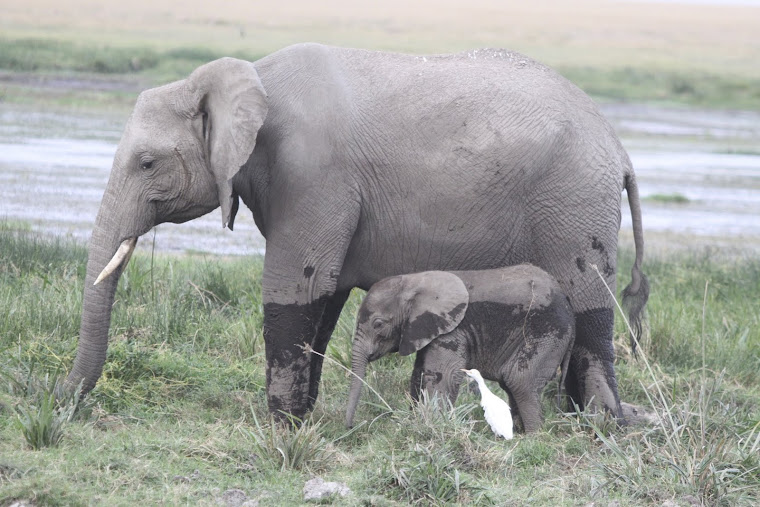
Amboseli elephants
Saturday, August 29, 2015

Saturday, August 22, 2015
A Heart that Closes and Opens
We expect a lot of ourselves we humans, especially in times of ostensible defeat or difficulty. When we stumble, are knocked down and fall on the ground, we tend to expect the universe to be normal and safe when we get up and move on. When our hearts are broken, we often brush ourselves off, and will ourselves to return to normal as soon as humanly possible so we may find love again. When we fall into disagreement with someone we often grit our teeth and summon our determination to prove ourselves right. Our mind works so hard trying to run the show, driving us forward to be normal and good, to prevail, do the right thing, and be in control. But when someone we love dies, our brains don't find it that easy to cloak the heart so we can simply soldier on. Death - one of the few unavoidable truths of human life - does this to us, helping us crack open in the face of what is real. It shows us, I think, that the heart and not the brain is our essence.
I recently learned of a degenerative condition in my right ankle that has been brewing for some time and will change the way I move out into the world in the future. It appears there will be no long hikes in Africa, or exploration of Tibet, or squash playing, or just plain marching up and down the hills of San Francisco... Arthritis is a disease (I first called it a beast) that usually affects those "of a certain age" and is in a way symbolic of the aging process. Here it is in front of me now, and I can feel my heart and mind contracting in response, as though to forbid its presence. No such luck, of course. It is alive and present in the body and cannot be cut away or made to disappear. So, what is one to do? Can I welcome it as an another "guest," as Rumi wrote in his classic poem? And just how is it possible to welcome something that makes you wince when you take some simple steps? I am not sure. What I know is that my problem solving brain is working overtime to try to figure out how to walk and move about in a different way, and what supplements or aids might be effective in diminishing the pain, and whether the great bug-a-boo of surgery is actually an option for someone in my position. I do know that a few glasses of wine soften the body in a strange way and momentarily blur out the physical stress, but so does a good movie, talk with a dear friend, or a nice meal lovingly prepared. And still ... there it is... While my mind is working away with the laundry list of solutions, I feel my heart shrinking around this new assault on my person. The heart withers and the brain goes on to imagine a dark and dingy trajectory of disability and limitation. It dares to tell me the story about becoming seriously disabled. Yes, it is a story, and it lives in the future which of course is not known. And instead of comforting my vulnerable body and forgiving myself for getting older, I get caught in a whirlwind of doubt and anxiety.
I experienced loss of another kind this last week. A dear friend of mine who lives in my old home town of Taos, New Mexico, has died after a valiant battle against late stage ovarian cancer. When I received the news I remember feeling a warmth and a softening in my chest, an ah-ha moment that reminded me of the preciousness of human life. I have no idea where my mind was - perhaps taking a well deserved rest - and that was a good thing! I recalled my last evening with this beautiful woman and the radiance I felt coming from her as she bravely offered her heart and mind through a long evening with close friends, wine, and conversation. She was very clear about where she was on her journey and didn't need to talk about it. Candles flickered and glasses were raised and life was all around us. Now she is gone. This is what happens to all of us. And the mystery of it all defies the powers of mind ... When I think about this lovely lady who was a shooting star in the sky, I realize that we all are just that: shooting stars or comets or great soaring birds winging our way across the heavens. We are fragile, we humans, and life is uncertain, whether we are seventy, thirty, or sixteen.
If I could see myself as a magnificent shooting star making its way through the air, then perhaps I could hold my physical difficulties with compassion and love. And why not? This body has done a great job getting me this far and it is unclear how long we'll be doing this together ... it's only fitting to show it some respect. Show it my open heart, not the twisted cruel one that resents my mortality. I am now taking refuge in my house that overlooks the grand and mysterious Pacific Ocean and there are snowy egrets in the creek foraging for fish, deer in the meadow beyond prancing through the brush, and as I look out at that landscape I come closer to seeing myself as a very small piece of the grand puzzle, one little player who searches for grounding, acceptance, and peace of mind. And none of this has anything to do with the power of the mind. I am grateful. I thank the universe.
I recently learned of a degenerative condition in my right ankle that has been brewing for some time and will change the way I move out into the world in the future. It appears there will be no long hikes in Africa, or exploration of Tibet, or squash playing, or just plain marching up and down the hills of San Francisco... Arthritis is a disease (I first called it a beast) that usually affects those "of a certain age" and is in a way symbolic of the aging process. Here it is in front of me now, and I can feel my heart and mind contracting in response, as though to forbid its presence. No such luck, of course. It is alive and present in the body and cannot be cut away or made to disappear. So, what is one to do? Can I welcome it as an another "guest," as Rumi wrote in his classic poem? And just how is it possible to welcome something that makes you wince when you take some simple steps? I am not sure. What I know is that my problem solving brain is working overtime to try to figure out how to walk and move about in a different way, and what supplements or aids might be effective in diminishing the pain, and whether the great bug-a-boo of surgery is actually an option for someone in my position. I do know that a few glasses of wine soften the body in a strange way and momentarily blur out the physical stress, but so does a good movie, talk with a dear friend, or a nice meal lovingly prepared. And still ... there it is... While my mind is working away with the laundry list of solutions, I feel my heart shrinking around this new assault on my person. The heart withers and the brain goes on to imagine a dark and dingy trajectory of disability and limitation. It dares to tell me the story about becoming seriously disabled. Yes, it is a story, and it lives in the future which of course is not known. And instead of comforting my vulnerable body and forgiving myself for getting older, I get caught in a whirlwind of doubt and anxiety.
I experienced loss of another kind this last week. A dear friend of mine who lives in my old home town of Taos, New Mexico, has died after a valiant battle against late stage ovarian cancer. When I received the news I remember feeling a warmth and a softening in my chest, an ah-ha moment that reminded me of the preciousness of human life. I have no idea where my mind was - perhaps taking a well deserved rest - and that was a good thing! I recalled my last evening with this beautiful woman and the radiance I felt coming from her as she bravely offered her heart and mind through a long evening with close friends, wine, and conversation. She was very clear about where she was on her journey and didn't need to talk about it. Candles flickered and glasses were raised and life was all around us. Now she is gone. This is what happens to all of us. And the mystery of it all defies the powers of mind ... When I think about this lovely lady who was a shooting star in the sky, I realize that we all are just that: shooting stars or comets or great soaring birds winging our way across the heavens. We are fragile, we humans, and life is uncertain, whether we are seventy, thirty, or sixteen.
If I could see myself as a magnificent shooting star making its way through the air, then perhaps I could hold my physical difficulties with compassion and love. And why not? This body has done a great job getting me this far and it is unclear how long we'll be doing this together ... it's only fitting to show it some respect. Show it my open heart, not the twisted cruel one that resents my mortality. I am now taking refuge in my house that overlooks the grand and mysterious Pacific Ocean and there are snowy egrets in the creek foraging for fish, deer in the meadow beyond prancing through the brush, and as I look out at that landscape I come closer to seeing myself as a very small piece of the grand puzzle, one little player who searches for grounding, acceptance, and peace of mind. And none of this has anything to do with the power of the mind. I am grateful. I thank the universe.
Wednesday, August 12, 2015
The Body Speaks to Us
- Yesterday I had an adventure in awareness. This woman who is a healer held my feet gently and then asked me to allow my mind to travel inside my feet, to feel what it was like inside that complicated mechanism of bone, muscle, and tendon. I did my belly breathing and shrunk myself sufficiently so I could actually fit myself inside my foot, and when I had landed, I was amazed at how crowded and busy it all was. I did this for quite some time, just breathing and feeling the busy universe of the foot, and gradually I sensed a strong pressure at the top of my left foot, a dully aching sensation that persisted and brought to mind the late afternoon four years ago when a lady in her car ran over my foot, knocking me to the ground and breaking various foot and leg bones. Oddly enough, I had thought I was "over" this trauma which sent me into emergency surgery for a badly broken elbow, but the truth of the matter is that our body holds everything we have experienced, and in some cases holds the experience with a remarkable persistence. I lay on the table and remembered my day going from light to dark, my memory of subsequent events blotted out by the sheer pain of the broken bones and the terror I felt through my whole being. There were tears that rested in my eye sockets that soon dribbled down my face. Yes, pain and fear had returned ... And yet I was safe and whole on this bright sunny afternoon in August, though my heart held layers of sadness for people I love whom I cannot help, for myself who yearns for more self-compassion.
Our bodies hold everything. There's a scar on my left index finger that calls up the morning I was with my grandparents in their country cottage and whittling on a stick with a cute little pocket knife. I was careless and I cut my finger badly. I cried, but not for long, because I was with two very stoic people and I needed to show I could rally quickly. The story is still there in my finger: the little girl who was hesitant to really feel her pain. A scar on my knee recalls the summer in Yellow Springs Ohio when I helped my husband bottle his home brew, as I lost balance and fell over on a broken bottle and then saw blood gushing from a deep wound. Looking through layers of flesh made me queasy, I can still remember. I was a young mother of twenty one, and I soldiered on ... of course. There are two vertical scar lines on my left and right cheeks where I had taken a razor blade to my face at nineteen in order to punish the man I lived with for not loving me enough. A stupid, frightening move... Happily, I don't notice these lines much anymore, though I can trace the old wounds anytime with my fingers. That story of suffering is something I still have a hard time revisiting. I don't think I want to "breathe into" that experience, though my healer friend would tell me that by doing that I can let it go.
My lungs hold fear and anxiety. When I walk the streets of the city and feel the steps of someone close behind me, I become immediately fearful. My heart starts to race, I pick up my pace, and feel my breathing speed up. There is a memory here which takes me back to being a five year old whose stuffed animals were taken away because I was asthmatic and couldn't breathe very well, and also to the time when I had to outrace an large old man who chased me up Green Street when I was nine. I hauled myself up the hill and breathed heavily, and finally reached my house safely, and now have no memory of why this character was after me. Strange and surreal, and yet this fear that came forward is terribly real. I simply don't want anyone moving in on me from behind ... I have this strange feeling that the lungs that I breathe through in my seventies are those of my uncertain childhood.
There are other stories that come from outside our own bodies. I am thinking of our domestic accoutrements like refrigerators, cars, record collections, and the pets we have as roommates. How many times have we named and boxed up another person because we noted their refrigerator filled with pure organics, their glossy BMW, or their French Bull Dog? Clearly these are NOT who we are, but rather examples of our quirky choices in the moment. The scars we carry from trauma, such as knife wounds to the finger or broken glass to the knee or slices across the face, are also NOT who we are, but again mindless and sometimes cruel detours from the path. And the way to let them go and see who we really are is to see them clearly and hold ourselves in compassion. We must breathe into our bodies and see that we are really and truly o.k. Beautiful as well...
From Dogen: "To study the Buddha Way is to study the self. To study the self is to forget the self. To forget the self is to be one with with all beings. When one with all beings, body and mind and bodies and minds of others drop away." Forget the self. Yes. Great idea.
Wednesday, August 5, 2015
Fifty Years a Mother ...
On August 5, 1965, just fifty years ago, I entered St. Elizabeth's hospital in Dayton, Ohio, and gave birth to a beautiful dark haired little baby girl. I was only twenty years old. I had been waiting a long time for her arrival, walking about my life in the middle of a sticky humid summer feeling a bit like a miniature elephant, and on that very day I found myself helping my husband and some friends move our furniture from one apartment to another closer to the center of town. Certainly an odd thing to do when you're about to give birth, but then my life up to then had been anything but normal or by the book! That evening my husband and I went to the Little Arts movie theater on Main Street and watched one of Ingmar Bergman's impossibly esoteric films, called "Wild Strawberries," I think. And then, miraculously in mid film, I felt my body talk to me, and I said to the man next to me, "it's time."
The birth ended up not being natural as I had wished, simply because I didn't have it in me to do the breathing properly, I was suddenly terrified, and in dire pain. She popped into the world looking perfect. And I remember thinking, "well that makes sense .... she took her time getting here!" In a surreal gesture of maternal love, my mother had arrived from New York to be in attendance, and I remember her staring out the hospital window and laughing at the nuns romping about playing tennis the day following the birth. I was so hot and so exhausted during those few days that everything felt like a slow blur. The next thing that stands out in my memory is standing over my daughter's bassinet and staring at her late at night, night after night, watching her breathe. I had a first mother's anxiety about her survival, I expect, and I kept up this vigilance for what seemed like a long time. She always breathed perfectly, and so I adjusted to diaper routine, sore breasts, and a killing fatigue. This was the beginning of my journey into motherhood and as I write this it strangely doesn't seem so terribly far away... On that day my entire life changed dramatically, and I now often struggle to picture who I was before this amazing event.
I am interested in reflecting on just how bringing a baby into the world changes us. I suspect there are all variety of transformations, since women are all different and come to this in varied states of mind and heart. Some women prepare diligently, reading Dr. Spock and books on child development, and some spend decades just waiting for the right time in their lives, some must work extra hard to make it happen, and some bravely choose to go it alone. For some it happens to them. That was what my life looked like. I had not put motherhood on my to do list at age eighteen or nineteen, and thus when I found myself facing it, I plunged headlong into it without any map to help me. I was scared mostly, and unsure of myself and my marriage. But I possessed a will that was formidable, and I put my head down and eventually figured out a way to respond to the helpless little being before me. She was a delightful baby, not too much fussing or crying or illness, and that was her first gift to me. It all felt rather magical and surreal, and I learned how to cherish her; my earlier aspirations to become an educated woman with a career in international diplomacy went "poof" and vanished in the steamy midwestern air. All of a sudden I was a mother. When a child arrives, all else becomes secondary. And that meant my marriage too, I guess. Friction and frustration arose in those first years between my husband and me because neither one of us had the energy to tend to one another, and we were too young to see that everything was terribly out of balance.
I think the first thing I was taught was self sacrifice, and then came love ... oozing from her cherubic face with the dark dark eyes. I felt it and I felt sure I could give it. For a while anyway. And then some three years later, in a different place entirely - my hometown of San Francisco - I brought another little girl into the world. She was very much on time, she came quickly, though her actual birthing involved some physical trauma and difficulty, which caused her little infant head to appear banana shaped, a fact she frequently mentioned with regret. Of course that didn't affect her stunning good looks as she evolved from chubby roll-poly little thing into a wiry and feisty little blond haired girl. It was the late sixties in San Francisco and the hippie movement was in full swing with all the flowered Indian dresses, patchouli oil, marijuana, and the devil may care attitude about life. I didn't every choose to be a hippie - it just happened to me. Like becoming a mother for the first time... And so my daughters had to navigate a sometimes murky landscape of too many adults, drugs, strobe lights, and loud music. Far from the "Leave it to Beaver" or "Ozzie and Harriet" families that had inhabited our television sets in the early days. She became sick right after birth, but recovered quickly and grew into a strong and willful little person. Clearly she was not destined to be the "good one" in the family! She didn't care, and neither did I. Her first gift to me, beyond her strong spirit and beauty, was the challenge of meeting difficulty with compassion and patience. She was my teacher in this, as her sister had been a teacher about love and cherishing. These lessons, like most important ones in life, took a very long time for me to learn!
My adult daughters have taught me a few wonderful things in this life: the profound place that family occupies in our lives (I had never known this, growing up in a fragmented unattended family of my own), the importance of holding our differences with love and understanding, the need to live in the moment, the importance of really listening, and the joys of being playful while eating mouthfuls of whipped cream. These are things I didn't have in my tool bag at the age of nineteen when I married their father. But growing up with these beautiful little beings took me on that journey of learning. I went on their camping trips, I created sprawling and celebratory birthday parties, soothed fears in the night, learned how to sew halloween costumes, became involved in their elementary school, and I tried my best to witness and understand their individual struggles. I didn't always succeed, and after about fourteen years of marriage my sights started to expand outward and I knew I needed to return to school and the possibility of finding my way in the larger world, as both my girls were involved in high school and social lives and I thought the time was right. Eventually our family dissolved and pain and suffering came, and we struggled for too many years to understand why people cease loving each other, or run away and do confusing things. The good thing was that none of us gave up on each other really...
The motherhood path was not always a smooth one for myself and my daughters .... Perhaps most mothers could say this as they looked back at their families. We have what is most important, though, and that is a willingness to look each other in the face with love and understanding. I think we have been teaching each other this for all these fifty years.
The birth ended up not being natural as I had wished, simply because I didn't have it in me to do the breathing properly, I was suddenly terrified, and in dire pain. She popped into the world looking perfect. And I remember thinking, "well that makes sense .... she took her time getting here!" In a surreal gesture of maternal love, my mother had arrived from New York to be in attendance, and I remember her staring out the hospital window and laughing at the nuns romping about playing tennis the day following the birth. I was so hot and so exhausted during those few days that everything felt like a slow blur. The next thing that stands out in my memory is standing over my daughter's bassinet and staring at her late at night, night after night, watching her breathe. I had a first mother's anxiety about her survival, I expect, and I kept up this vigilance for what seemed like a long time. She always breathed perfectly, and so I adjusted to diaper routine, sore breasts, and a killing fatigue. This was the beginning of my journey into motherhood and as I write this it strangely doesn't seem so terribly far away... On that day my entire life changed dramatically, and I now often struggle to picture who I was before this amazing event.
I am interested in reflecting on just how bringing a baby into the world changes us. I suspect there are all variety of transformations, since women are all different and come to this in varied states of mind and heart. Some women prepare diligently, reading Dr. Spock and books on child development, and some spend decades just waiting for the right time in their lives, some must work extra hard to make it happen, and some bravely choose to go it alone. For some it happens to them. That was what my life looked like. I had not put motherhood on my to do list at age eighteen or nineteen, and thus when I found myself facing it, I plunged headlong into it without any map to help me. I was scared mostly, and unsure of myself and my marriage. But I possessed a will that was formidable, and I put my head down and eventually figured out a way to respond to the helpless little being before me. She was a delightful baby, not too much fussing or crying or illness, and that was her first gift to me. It all felt rather magical and surreal, and I learned how to cherish her; my earlier aspirations to become an educated woman with a career in international diplomacy went "poof" and vanished in the steamy midwestern air. All of a sudden I was a mother. When a child arrives, all else becomes secondary. And that meant my marriage too, I guess. Friction and frustration arose in those first years between my husband and me because neither one of us had the energy to tend to one another, and we were too young to see that everything was terribly out of balance.
I think the first thing I was taught was self sacrifice, and then came love ... oozing from her cherubic face with the dark dark eyes. I felt it and I felt sure I could give it. For a while anyway. And then some three years later, in a different place entirely - my hometown of San Francisco - I brought another little girl into the world. She was very much on time, she came quickly, though her actual birthing involved some physical trauma and difficulty, which caused her little infant head to appear banana shaped, a fact she frequently mentioned with regret. Of course that didn't affect her stunning good looks as she evolved from chubby roll-poly little thing into a wiry and feisty little blond haired girl. It was the late sixties in San Francisco and the hippie movement was in full swing with all the flowered Indian dresses, patchouli oil, marijuana, and the devil may care attitude about life. I didn't every choose to be a hippie - it just happened to me. Like becoming a mother for the first time... And so my daughters had to navigate a sometimes murky landscape of too many adults, drugs, strobe lights, and loud music. Far from the "Leave it to Beaver" or "Ozzie and Harriet" families that had inhabited our television sets in the early days. She became sick right after birth, but recovered quickly and grew into a strong and willful little person. Clearly she was not destined to be the "good one" in the family! She didn't care, and neither did I. Her first gift to me, beyond her strong spirit and beauty, was the challenge of meeting difficulty with compassion and patience. She was my teacher in this, as her sister had been a teacher about love and cherishing. These lessons, like most important ones in life, took a very long time for me to learn!
My adult daughters have taught me a few wonderful things in this life: the profound place that family occupies in our lives (I had never known this, growing up in a fragmented unattended family of my own), the importance of holding our differences with love and understanding, the need to live in the moment, the importance of really listening, and the joys of being playful while eating mouthfuls of whipped cream. These are things I didn't have in my tool bag at the age of nineteen when I married their father. But growing up with these beautiful little beings took me on that journey of learning. I went on their camping trips, I created sprawling and celebratory birthday parties, soothed fears in the night, learned how to sew halloween costumes, became involved in their elementary school, and I tried my best to witness and understand their individual struggles. I didn't always succeed, and after about fourteen years of marriage my sights started to expand outward and I knew I needed to return to school and the possibility of finding my way in the larger world, as both my girls were involved in high school and social lives and I thought the time was right. Eventually our family dissolved and pain and suffering came, and we struggled for too many years to understand why people cease loving each other, or run away and do confusing things. The good thing was that none of us gave up on each other really...
The motherhood path was not always a smooth one for myself and my daughters .... Perhaps most mothers could say this as they looked back at their families. We have what is most important, though, and that is a willingness to look each other in the face with love and understanding. I think we have been teaching each other this for all these fifty years.
Tuesday, July 28, 2015
Loss
I am thinking a lot about loss these days ... a good friend in New Mexico failing in her battle with cancer, another friend suffering brain damage as a result of chemo, the intimacy I hunger for with another like-minded being, a lion hunted down in Zimbabwe and decapitated, the massacre of the magnificent elephants in obscene numbers, the loss of flexibility and reliability in my body, even the loss of my mother, and all the old stories of my past that I can't tap into now because they are like dust.
How do I hold loss? How do I ride out the journey of continuing to lose what I love? This is a hard one because it demands that I stay steady and willing inside the lightening speed momentum of this life, not looking behind me or in front of me. I've been reminded time and time again that there really is no past and no future, and much of the time I agree, but I am still likely to float into these realms out of habit. So, what do we (I) do? I guess we (I) try to understand what it feels like to lose.
I haven't lost a good friend recently so it's hard to know how to talk about it. I have been lucky in this, as most of my contemporaries are still kicking. We all know that losing one another is around the corner, but we don't often talk about it... and we go on our way trying like hell to live in present time. So, I'm faced with the "idea" of losing, I guess, that projection of an experience that will undoubtedly come, one that will feel sad, empty, achy and bleak. And once I cross that landscape of grief, I'll be left with nostalgia, looking back at the good old times when none of us ever gave a thought to mortality. I remember my grandmother in her late eighties talking about losing all her friends, about feeling terribly alone in the world and less hopeful about what lay ahead. In some way she was telling me she was ready to move on. Our friends provide a sacred community of people whom we have chosen and with whom we have rich and interesting things to share. Now that I'm seventy, I understand as I never did before what she was saying about the void left in life with the departure of old friends.
When I gave up my last "romantic" relationship that had soured quickly and yet drove me to endure, I knew that I would probably live out my days without a partner. When I set out on my own, I didn't give it a thought, but now I do. Now I watch couples in restaurants and on the street and I feel a tugging in my heart. I want what they have. Closeness, laughter, understanding, a life together. The more I look back on my story the more I realize I am ill equipped for intimacy, that what my mother modeled and what I embraced in my twenties and thirties and beyond, had led me to a very distinct place of renunciation. I was sure I wasn't good at intimacy and speaking about love, and therefore I needed to content myself with the solitary journey of an elder woman. There is loss here, yes, and sometimes there's acceptance, as well as deep sadness. But there is also the pleasure of old age wisdom!
The wiping out of wildlife in Africa has been breaking my heart lately. Like a sponge, I tend to absorb all the news, and I speak to others about it when it makes sense, and yet it remains one of the deeply troubling pieces of being alive in this world at this time. Animals have been a part of my life for as long as I can remember, and I think I have always felt as though I was related to them, part of their family, whether they were cats, dogs, birds, or even the epic elephant roaming East Africa. So when I read about the murder of elephants and lions, I feel as though someone in my family has been ripped away. There's heaviness in my chest, a weepy feeling inside. And a whirling sense of outrage at the injustice of it all. What then? I must hold this, not look away. I need to speak the truth, and try to believe that humankind has the capacity to become more humane. That is all..
I am seventy years old and my body is starting to become unreliable. I've been told it is strong and vital, and that deep down I am healthy. This makes me feel lightheaded for just a while, and then I return to the stinging pain in my ankle as I walk, the clicking and wobbling of my knee, and the occasional feeling that I am standing on a very unsteady surface, and it is then that I understand what I am carrying. The body is speaking its truth, and what is good about all this is that I am finally able to listen to what it is saying. If I'm lucky this paying attention brings good will and compassion, as long as I'm able to stay in the present moment. The past houses the narratives that are blurry and distorted, and the future holds only random dreams and dark fear. So instead of mourning loss, I can attempt to offer love to my aging self.
The loss of my mother still lies heavily on me. You'd think I would have outgrown or moved on or something, especially since she had always been such a shadowy presence in my life. How do you mourn the loss of something that was never really there? There is an idea I hold about her as a mother, and then there is the mysterious relationship that actually unfolded starting in February of 1945. In fact, there's a lot I don't know. There was always hunger and yearning and a sense of being in the shadows, but there had to have been other times of sweetness, or so I tell myself. No way to know now. I do know that I still feel this deep dark relationship to her, and I suspect I'll be stuck with that for the rest of my life... In narrating my own story I have unearthed this intimate connection between the two of us, this complicity in secrecy and self destruction, and in the telling of it I have felt her come alive in a way. But everything that is alive does wither and die, and so there is that path to experience a loss of love, imperfect as it was. I surround myself with her bold paintings, some pretty furniture and decorative pieces, and find myself more times than I can count speaking in her tongue, using her vernacular. "Bob's your uncle!" she used to declare, and I love saying this too. I'm not quite sure why... Am I calling her back, or just making way for her to show up every once in a while in present time? I don't know. This is a heavy loss still, and I am still trying to figure out how to live with it.
Memory has given me problems for some time now. I can't see the texture and substance of much of my young life: living in North Beach when I was in 6th grade, going to the mountains for my 10th birthday, what I did with my friends at Miss Barrie's in Florence, or those beautiful sunny afternoons I went horseback riding in the Sonoma countryside with my great friend Sue when we were self-conscious teenagers; there are so many other little scenes that don't come in clearly, and all I see is the sweep of an experience, much like the floating smoke from my mother's cigarette ... When I decided to write a memoir, I wanted to be able to flesh out some of these small chapters of my childhood and tell vivid, detail-filled stories, complete with lots of interesting dialogue. As I cast my mind back, I rarely saw the particulars, nor did I hear the conversations. I became frustrated, I worried about memory loss, and then finally decided to fabricate here and there in order to offer a story, and this usually worked. Aside from the challenges the book offered me, there is a much larger conundrum, that of ultimately losing the bulk of memory and becoming unhinged and confused. Yes, I'm thinking of that elephant in the room called dementia. A total loss of personhood. The ultimate nightmare, even worse in my imagination than losing my eyesight, which I used to believe was the worst possible deprivation I'd have to face. I used to play different word games in order to sharpen my brain power, and I persevered with piano study because I've learned somewhere that playing a musical instrument may be an antidote to Alzheimers. No, in truth I play the piano because I love the sound of Bach on the keyboard of my grandmother's piano, and feel proud to offer it up ... But now I do take solace in the notion that the discipline of piano practice might be therapeutic for my overworked mind. I think I know how to live with this loss: just stay in my life fully, attending to what comes and holding all the difficulties with love. No other way...
What is going to happen to me will happen no matter what decisions I make, and today has its share of wonder and beauty that must be seen and felt. Because we are very lucky to be alive in this strange and complicated time, adding our own portion of goodness.
How do I hold loss? How do I ride out the journey of continuing to lose what I love? This is a hard one because it demands that I stay steady and willing inside the lightening speed momentum of this life, not looking behind me or in front of me. I've been reminded time and time again that there really is no past and no future, and much of the time I agree, but I am still likely to float into these realms out of habit. So, what do we (I) do? I guess we (I) try to understand what it feels like to lose.
I haven't lost a good friend recently so it's hard to know how to talk about it. I have been lucky in this, as most of my contemporaries are still kicking. We all know that losing one another is around the corner, but we don't often talk about it... and we go on our way trying like hell to live in present time. So, I'm faced with the "idea" of losing, I guess, that projection of an experience that will undoubtedly come, one that will feel sad, empty, achy and bleak. And once I cross that landscape of grief, I'll be left with nostalgia, looking back at the good old times when none of us ever gave a thought to mortality. I remember my grandmother in her late eighties talking about losing all her friends, about feeling terribly alone in the world and less hopeful about what lay ahead. In some way she was telling me she was ready to move on. Our friends provide a sacred community of people whom we have chosen and with whom we have rich and interesting things to share. Now that I'm seventy, I understand as I never did before what she was saying about the void left in life with the departure of old friends.
When I gave up my last "romantic" relationship that had soured quickly and yet drove me to endure, I knew that I would probably live out my days without a partner. When I set out on my own, I didn't give it a thought, but now I do. Now I watch couples in restaurants and on the street and I feel a tugging in my heart. I want what they have. Closeness, laughter, understanding, a life together. The more I look back on my story the more I realize I am ill equipped for intimacy, that what my mother modeled and what I embraced in my twenties and thirties and beyond, had led me to a very distinct place of renunciation. I was sure I wasn't good at intimacy and speaking about love, and therefore I needed to content myself with the solitary journey of an elder woman. There is loss here, yes, and sometimes there's acceptance, as well as deep sadness. But there is also the pleasure of old age wisdom!
The wiping out of wildlife in Africa has been breaking my heart lately. Like a sponge, I tend to absorb all the news, and I speak to others about it when it makes sense, and yet it remains one of the deeply troubling pieces of being alive in this world at this time. Animals have been a part of my life for as long as I can remember, and I think I have always felt as though I was related to them, part of their family, whether they were cats, dogs, birds, or even the epic elephant roaming East Africa. So when I read about the murder of elephants and lions, I feel as though someone in my family has been ripped away. There's heaviness in my chest, a weepy feeling inside. And a whirling sense of outrage at the injustice of it all. What then? I must hold this, not look away. I need to speak the truth, and try to believe that humankind has the capacity to become more humane. That is all..
I am seventy years old and my body is starting to become unreliable. I've been told it is strong and vital, and that deep down I am healthy. This makes me feel lightheaded for just a while, and then I return to the stinging pain in my ankle as I walk, the clicking and wobbling of my knee, and the occasional feeling that I am standing on a very unsteady surface, and it is then that I understand what I am carrying. The body is speaking its truth, and what is good about all this is that I am finally able to listen to what it is saying. If I'm lucky this paying attention brings good will and compassion, as long as I'm able to stay in the present moment. The past houses the narratives that are blurry and distorted, and the future holds only random dreams and dark fear. So instead of mourning loss, I can attempt to offer love to my aging self.
The loss of my mother still lies heavily on me. You'd think I would have outgrown or moved on or something, especially since she had always been such a shadowy presence in my life. How do you mourn the loss of something that was never really there? There is an idea I hold about her as a mother, and then there is the mysterious relationship that actually unfolded starting in February of 1945. In fact, there's a lot I don't know. There was always hunger and yearning and a sense of being in the shadows, but there had to have been other times of sweetness, or so I tell myself. No way to know now. I do know that I still feel this deep dark relationship to her, and I suspect I'll be stuck with that for the rest of my life... In narrating my own story I have unearthed this intimate connection between the two of us, this complicity in secrecy and self destruction, and in the telling of it I have felt her come alive in a way. But everything that is alive does wither and die, and so there is that path to experience a loss of love, imperfect as it was. I surround myself with her bold paintings, some pretty furniture and decorative pieces, and find myself more times than I can count speaking in her tongue, using her vernacular. "Bob's your uncle!" she used to declare, and I love saying this too. I'm not quite sure why... Am I calling her back, or just making way for her to show up every once in a while in present time? I don't know. This is a heavy loss still, and I am still trying to figure out how to live with it.
Memory has given me problems for some time now. I can't see the texture and substance of much of my young life: living in North Beach when I was in 6th grade, going to the mountains for my 10th birthday, what I did with my friends at Miss Barrie's in Florence, or those beautiful sunny afternoons I went horseback riding in the Sonoma countryside with my great friend Sue when we were self-conscious teenagers; there are so many other little scenes that don't come in clearly, and all I see is the sweep of an experience, much like the floating smoke from my mother's cigarette ... When I decided to write a memoir, I wanted to be able to flesh out some of these small chapters of my childhood and tell vivid, detail-filled stories, complete with lots of interesting dialogue. As I cast my mind back, I rarely saw the particulars, nor did I hear the conversations. I became frustrated, I worried about memory loss, and then finally decided to fabricate here and there in order to offer a story, and this usually worked. Aside from the challenges the book offered me, there is a much larger conundrum, that of ultimately losing the bulk of memory and becoming unhinged and confused. Yes, I'm thinking of that elephant in the room called dementia. A total loss of personhood. The ultimate nightmare, even worse in my imagination than losing my eyesight, which I used to believe was the worst possible deprivation I'd have to face. I used to play different word games in order to sharpen my brain power, and I persevered with piano study because I've learned somewhere that playing a musical instrument may be an antidote to Alzheimers. No, in truth I play the piano because I love the sound of Bach on the keyboard of my grandmother's piano, and feel proud to offer it up ... But now I do take solace in the notion that the discipline of piano practice might be therapeutic for my overworked mind. I think I know how to live with this loss: just stay in my life fully, attending to what comes and holding all the difficulties with love. No other way...
What is going to happen to me will happen no matter what decisions I make, and today has its share of wonder and beauty that must be seen and felt. Because we are very lucky to be alive in this strange and complicated time, adding our own portion of goodness.
Tuesday, July 21, 2015
Life as a Fugue ... Musings from the Carmel Bach Festival
I gave myself a break for a week and didn't prop myself up in the chair and order myself to work on this blog... Thought more time passing would help me see some ideas things more clearly, like whether it matters or not if a lot of people read this, and whether I could resist beating myself up for not performing my weekly task. Did pretty well with the not beating myself up, and as far as the other goes, I'm not sure how I feel.
This has been a complicated time for me and a number of people I know and love, and because I am in some ways an emotional sponge, I end up carrying around other people's weighty stories, which often gets me confused. Let's see what was going on before things got complicated ... I was motoring through a second draft of my memoir so I could send it to another wise writer to read and give me feedback. Crunching through those 220 pages was tough at times but I plugged away and completed it. Done for now with version 2. I meditated regularly and learned a new kind of diaphragmatic breathing that creates more space in the body and brings calm, I kept up regular piano practice and had a thoughtful lesson with my wise young teacher last Friday. I visited a few doctors to talk about a painful tendonitis in my ankle, hoping I'd get reassurance that the affliction would eventually pass (like everything else). Ah, the non-stop tending we must do when we are aging... I repeat this to people and try to act as though I find it curious and amusing, but deep down I find I'm out of sorts and discouraged. I so want to be brave and accept adversity, and often feel I lack the tools. And I wonder a lot if it's like that for everyone else... I am still spending more time alone than I'd like, but when my ankle was acting up and I really needed to stay off my feet, that of course provided a good excuse to sink back on the couch at home with some yummy delivered food and a good few episodes of MASH on Netflix. It's pretty easy for me to retreat like this.
When I'm not watching something on the tube, I'm often thinking about my oldest daughter who is going through a very tough time with estrangement from her daughter and an old friend, and my old friend from the 70's who is facing a big move and the giving up of an old and beloved home in order to find a simpler way to live. These two women - one 50 and the other 80 - are suffering these days and I see myself wanting to make a difference while I know my power to do so is limited. I let go of daughter #1 a very long time ago, or at least I thought I did, and she has been hugely resourceful and forged a rewarding purposeful life; she has kept me at a distance often so that she can work out her problems on her own because that has been her nature. But now it's becoming harder for her. My friend is a highly intelligent and stoic woman who rarely asks for help, and yet I see fatigue and worry in her face each time we get together and talk about our lives. The themes repeat themselves over and over ... our families, the books we're reading, maybe the news and politics ... with the unspoken thoughts lurking under the surface.
For the last few days I've been listening to Bach here at the Carmel Bach Festival, closing my eyes and following the notes of the cellos, violins, the harpsichord, the basses, and lutes, and feeling at home again. JS Bach brought the world an unusual new musical form called the fugue, and this morning when I sat in the beautiful old Carmel Mission listening to a series of preludes and fugues for the organ, I had this dreamy notion that the fugue form is a lot like our life. The different voices from the organ were dancing in counterpoint, and I tried to follow them in the cool dark church. It was like trying to track the images in a kaleidoscope in a way. I am currently learning one of his simpler fugues for the piano, and what I keep coming back to is that this is a tough job for someone like myself who never could juggle or multi-task. It is hard, and I am going to learn it (hear the intellectual imperative here?). In the fugue, a "subject" is introduced in the beginning, and repeated in a mind-tingling counterpoint by a number of different voices as the piece moves forward. A response to the subject follows and is woven into the composition, also in more than one voice. What makes Bach a genius is his ability to build this composition so seamlessly that you hear BOTH the totality of the voices and each individual voice clearly and at the same time. Interestingly, I have learned that there is a whole other kind of "fugue" that signifies a psychological disorder in which a person loses awareness of his or her identity when fleeing from a familiar environment. In a strange and perhaps obscure way, this definition relates to the musical form (you have to give up first subject to take on the next or offer the response ... identity has to be relinquished ... you cannot hold on).
Both of the above definitions make me think of our journeys through life. As a child, we are on the receiving end of a "subject" (or subjects) handed to us by parents and relations, those multiple voices, and of course there is our response to the subject that follows. As we go through life a multitude of subjects arise, and we carry them with us in our bodies and minds as we grow up. We respond and we voice our own subjects. While I worked at fathoming and responding to the subjects handed down to me, such as "be seen and not heard," or "be a good girl," the themes that I gave voice to as a girl, such as "I need to know the truth," "I need to be heard," "I want to be loved" often met with no response, and so the piece of music lacked harmony and solidity. Later in life, I believe we modify the themes and create our own, and cast the music in a different "key," perhaps. I think this happens when we have a clearer sense of self, and we cease reacting so much to those around us. We carry the profound old subjects like: love and connection, doing no harm, and being of value in the world, but we come to understand those in new and interesting ways. Many of us have also had times in our lives when we run away from home and temporarily forget who we are, where the only way to see ourselves more clearly is to leave the familiar behind and perceive ourselves in a foreign context. My memoir was born from that understanding.
This book has shown me the "subjects" or themes of my life more clearly, and allowed me to get closer to my life, into the dark corners and forgotten spaces so I can see them. I used to think it looked like a mosaic or kaleidoscope, but now it appears to me more as a tapestry, with the different strands of "through line," or "subject" creating an interesting colorful piece of fabric. I'd also like to think now of the journey being played out as a multi-voiced fugue with its varying voices speaking their own truths and answering each other and sometimes coming together in stunning harmony.
Both of the above definitions make me think of our journeys through life. As a child, we are on the receiving end of a "subject" (or subjects) handed to us by parents and relations, those multiple voices, and of course there is our response to the subject that follows. As we go through life a multitude of subjects arise, and we carry them with us in our bodies and minds as we grow up. We respond and we voice our own subjects. While I worked at fathoming and responding to the subjects handed down to me, such as "be seen and not heard," or "be a good girl," the themes that I gave voice to as a girl, such as "I need to know the truth," "I need to be heard," "I want to be loved" often met with no response, and so the piece of music lacked harmony and solidity. Later in life, I believe we modify the themes and create our own, and cast the music in a different "key," perhaps. I think this happens when we have a clearer sense of self, and we cease reacting so much to those around us. We carry the profound old subjects like: love and connection, doing no harm, and being of value in the world, but we come to understand those in new and interesting ways. Many of us have also had times in our lives when we run away from home and temporarily forget who we are, where the only way to see ourselves more clearly is to leave the familiar behind and perceive ourselves in a foreign context. My memoir was born from that understanding.
This book has shown me the "subjects" or themes of my life more clearly, and allowed me to get closer to my life, into the dark corners and forgotten spaces so I can see them. I used to think it looked like a mosaic or kaleidoscope, but now it appears to me more as a tapestry, with the different strands of "through line," or "subject" creating an interesting colorful piece of fabric. I'd also like to think now of the journey being played out as a multi-voiced fugue with its varying voices speaking their own truths and answering each other and sometimes coming together in stunning harmony.
Tuesday, July 7, 2015
Random Thoughts on Healing
When I had my nighttime panic attack on retreat recently, my brain tried to convince me I was a bad Buddhist. After all, it said, you've been meditating over 17 years, can't you get it right every once in a while?
Here are some other weird and perverse stories that I have carried:
When I got ulcers about 8 years ago, I was convinced it was because of all the hard drinking I had done in high school when I was trying to numb out and pretend I wasn't angry at my mother. I had effectively worn away my insides from being irresponsible.
When I had a month's siege of headaches four or five years ago, I was convinced I had a brain tumor and my mind fixed on the fear factor and kept me spinning. Working in hospice and seeing people with brain cancer brought this into focus and feeling I had inherited my mother's innate frailty with life, I was convinced.
When I couldn't remember elements of my childhood while working away on the memoir during the last couple of years, I was sure that it was because I had done drugs and alcohol in my youth and destroyed most of my brain cells responsible for childhood memories.
When I heard from two orthopedic doctors that I might need knee replacement, I immediately thought it had to do with carrying too much weight around for too long, which of course led me to proclaim that I didn't know how to live a healthy life.
When I sit in the midst of feeling lonely and sad, which has been happening a bunch lately, I begin to question my innate ability to love others, to be lovable, to know how to be in relationships, thinking frequently that I"m too aloof and know-it-all for my own good. Since that was a childhood defense for me, it's logical it would continue. Mostly I think I"m pretty good with family, but as to the rest of it -- the friendship and lovers, I'm not so sure...
There are many more instances of my judging mind than the ones mentioned above, because my brain has been busy for a very long time monitoring my behavior, ever ready to give me failing grade for not being good enough. Being mindful and seeing this as I do, my job is clearly to head this off at the pass, to close the door to the judgment and stories, say "no thank you," and get on with the adventure of living, as opposed to evaluating. A conversation I had yesterday with a gentle healer went a long way to opening up the concept of trauma to me, and I want to bring this to bear on all of this. Trauma takes many forms in our life -- it can look like child beating, or just plain neglect and contempt. It can be wartime blood and death, or it can be getting clobbered by a car while crossing a city street in my neighborhood. It can be rape and incest, or a continual negation of one's character. Our body is an amazing vessel that carries all our life experiences, storing away the more painful into a deeper place often, and as we age, get a little more tired, we slow down and become quieter, and this body begins to reveal the truth. There is pain, and it has a history. We can respond in a couple of ways: we can continue doing what we're used to, telling stories and making judgments, or we can approach the difficulty with love and compassion. If we choose this, we can heal ourselves and begin to feel normal.
It turns out that the primary faculty that leads to healing the heart (and by association the body) is love and affection. I enjoy saying that because it reminds me of the Dalai Lama who said that his religion is kindness, and this feels profoundly true to me. So, despite whatever suffering (trauma) we (I) have endured, we (I) need to summon kindness and compassion so we can continue with the adventure of being alive. I have come to this wisdom late in life, but no matter, because I see the fruits of this kind of attention. I have discovered my own ability to stop and rub my fingers when they ache as I practice the piano for hours, and say to myself gently, "there, there, it's just stiffness." I've found my vital breath in the midst of a storm of mindLESSness and been able to return to balance. I've looked back at the trajectory of my life and seen all the beautiful humans and animals I have loved and been loved by. Or ... just recently I've looked at my swollen knee and just seen a creaky sore joint that is now 70 years old, then touched it with care.
The road ahead for all of us is getting shorter each day we are alive, and it only seems reasonable to apply love, which is the root of being a human, not stories and judgment which lack form and truth. I write and I tell stories because I must, it is part of inhabiting my life, but those stories are part of a much larger trajectory which is, in fact, about telling the truth and creating beauty. I think that's why I'm here.
Subscribe to:
Posts (Atom)